Establishing a continuous user research practice from scratch in a hyper-growth fintech, unlocking evidence-based product strategy.
- Fintech/Web3
- Design Ops & Leadership
- Research lead
Context
The challenge
Ramp Network was scaling rapidly over 6 years, but product decisions were often based on intuition rather than user evidence. There was no understanding of user behaviour and needs across product, growth, and leadership teams - and no processes in place to build one. That's exactly why they hired me.
The organisation
Ramp Network is a Web3 scale-up that processes fiat <> crypto transactions for leading crypto wallets. In 2024 the company pivoted from B2B2C to a B2C model, with launching their own crypto wallet and mobile app. I joined the company in a dual role - UX Designer & User Research Lead to help bring that vision to reality.
WaysConf 2025: Trust, stress & crypto wallets: How we built a research culture in a Web3 scale-up
Goals
- Build 0 → 1 research tooling, processes and repositories to enable all teams to run user research on a regular basis.
- Gather user insights from interviews, surveys and quant data to inform product strategy and build organisational empathy.
- Immerse the company in the world of the users through presenting insights and bringing user research to roadmap planning meetings.
- Educate team members, coach them in their first research studies and encourage to run studies on their own.
Ensuring insights didn't stay in decks, but shaped decisions across teams.
Team Education
Numerous internal training sessions and mini-presentations allowed the whole company to see the value in user research and learn how to conduct it.
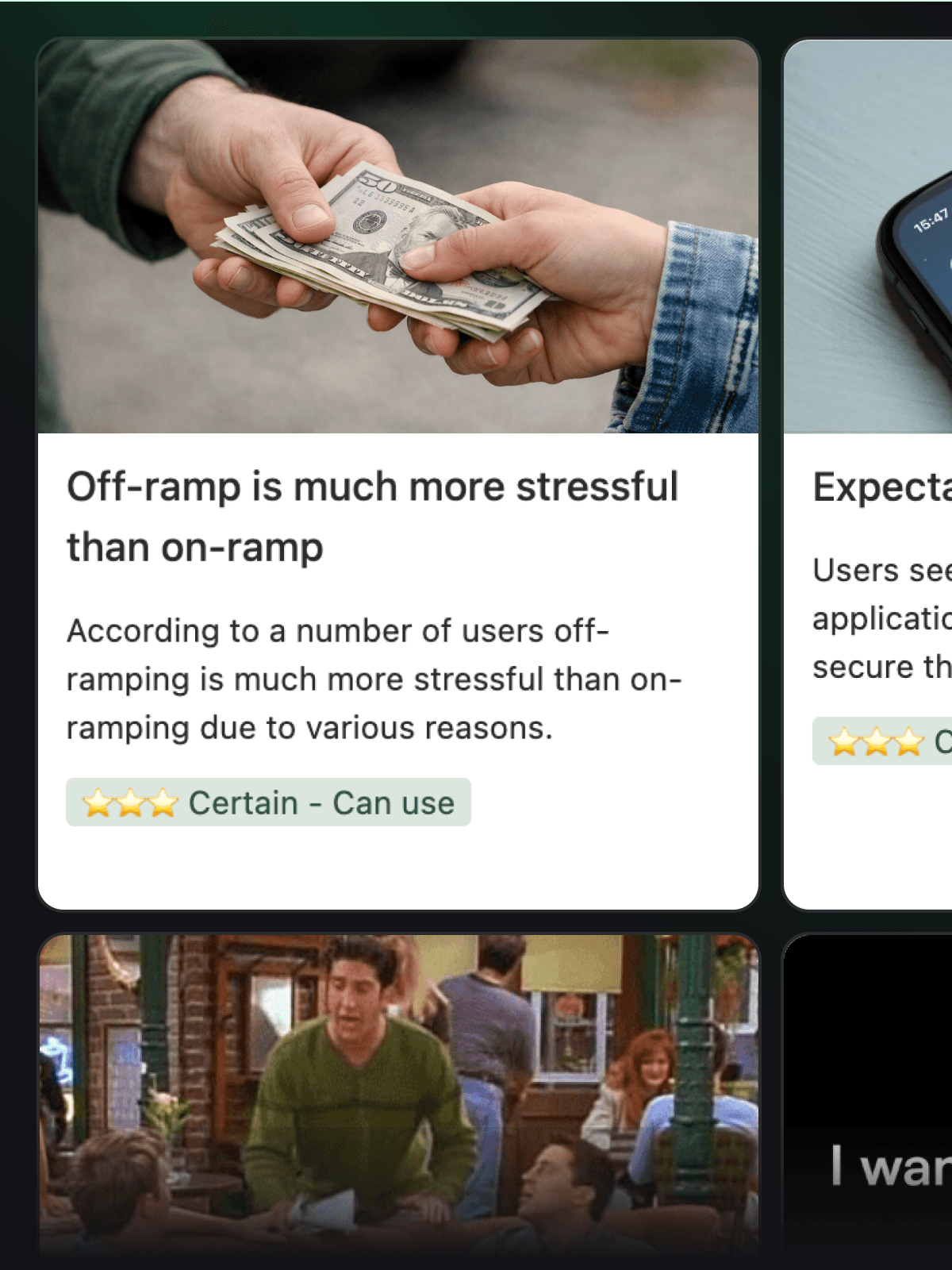
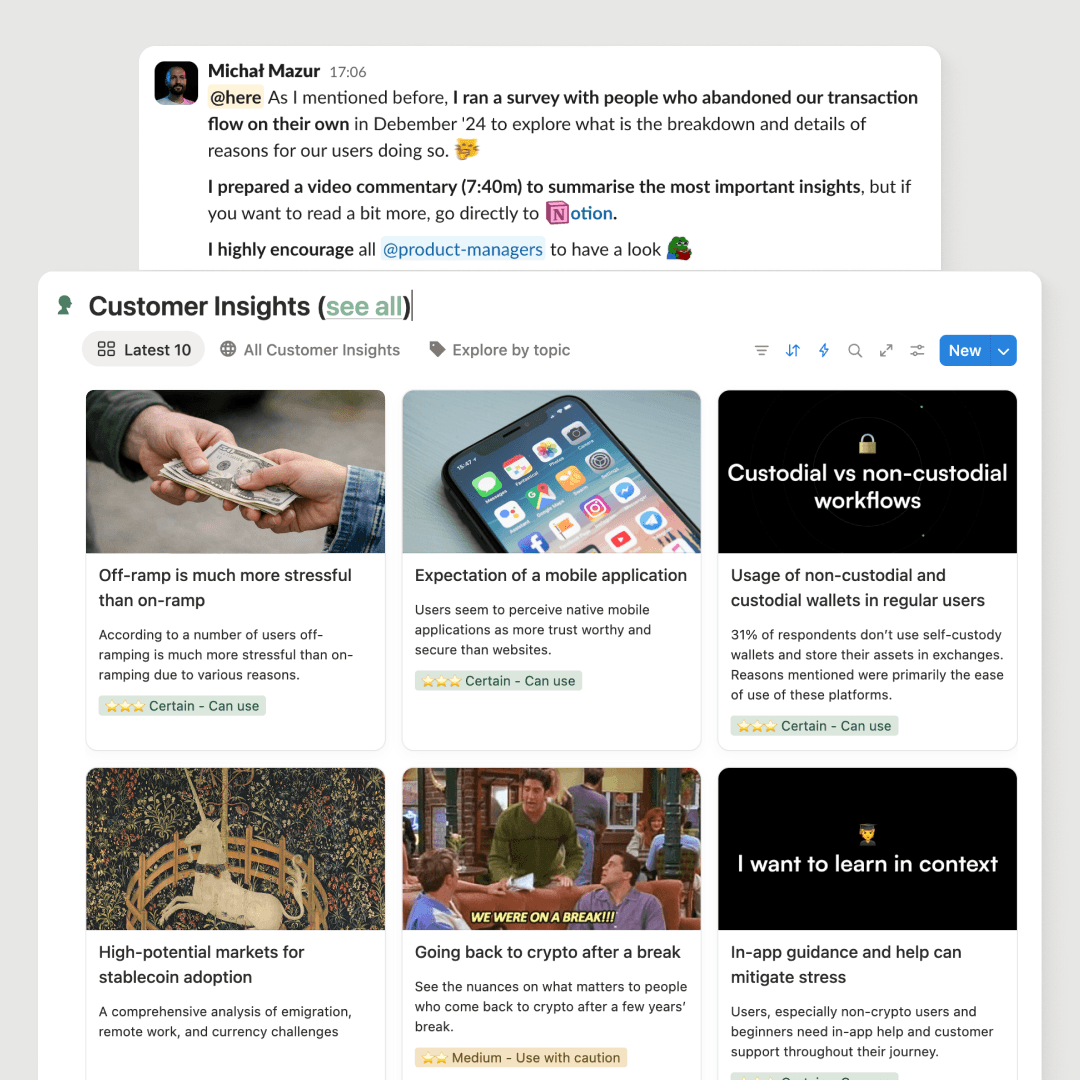
Insight Repository in Notion
I made it super easy for my teammates to read summaries of interviews or bite-sized insights they could apply in their product or marketing practice, all in a central data repository.
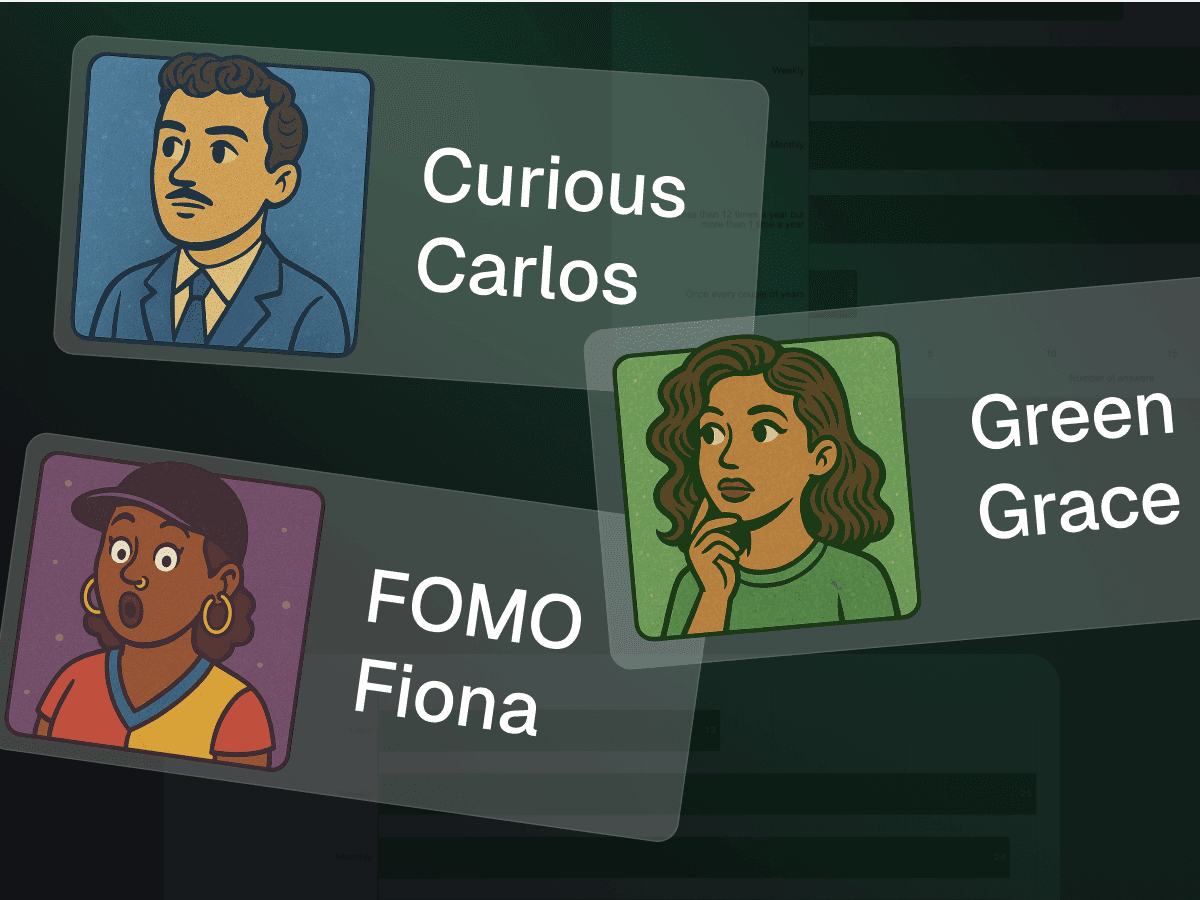
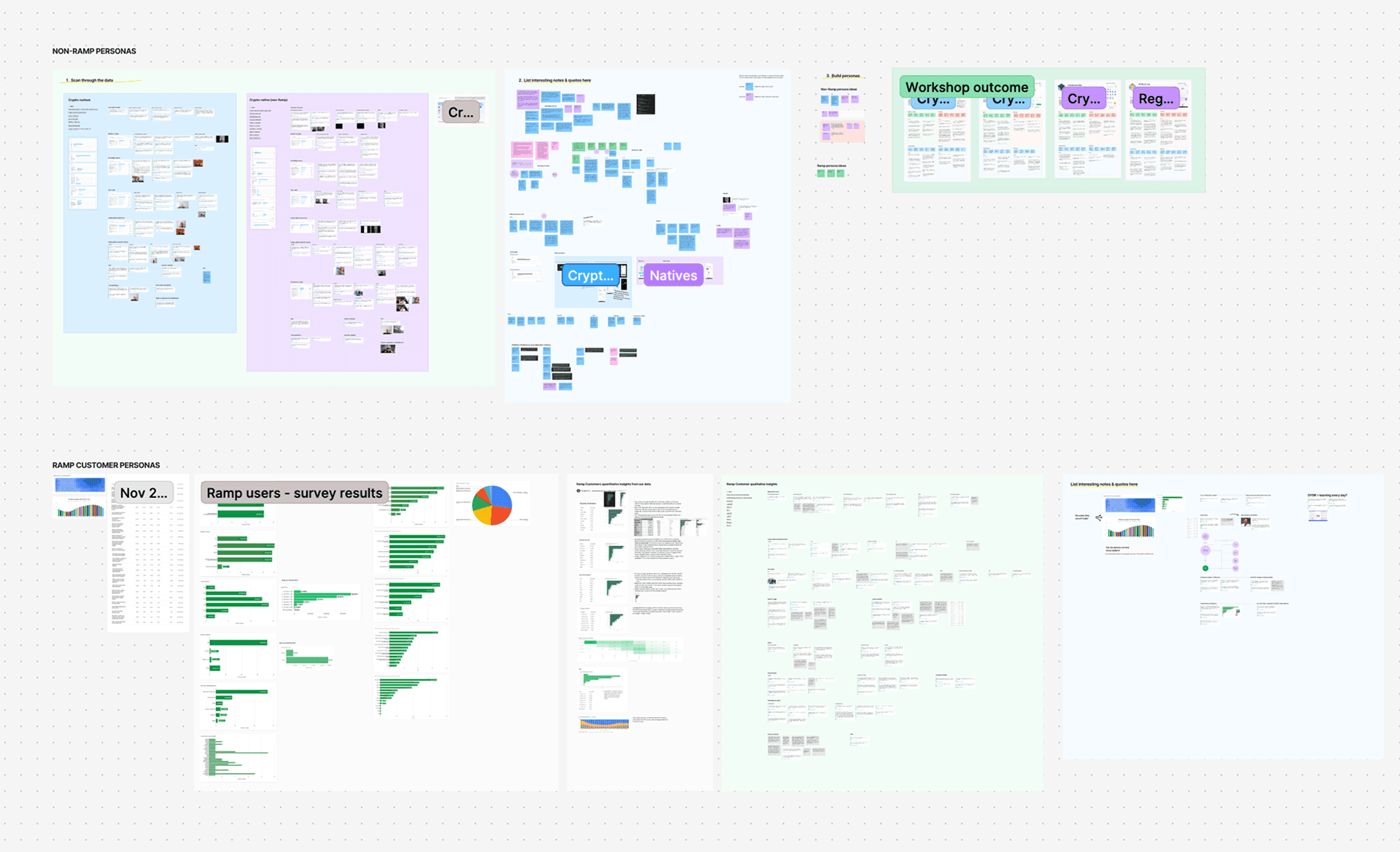
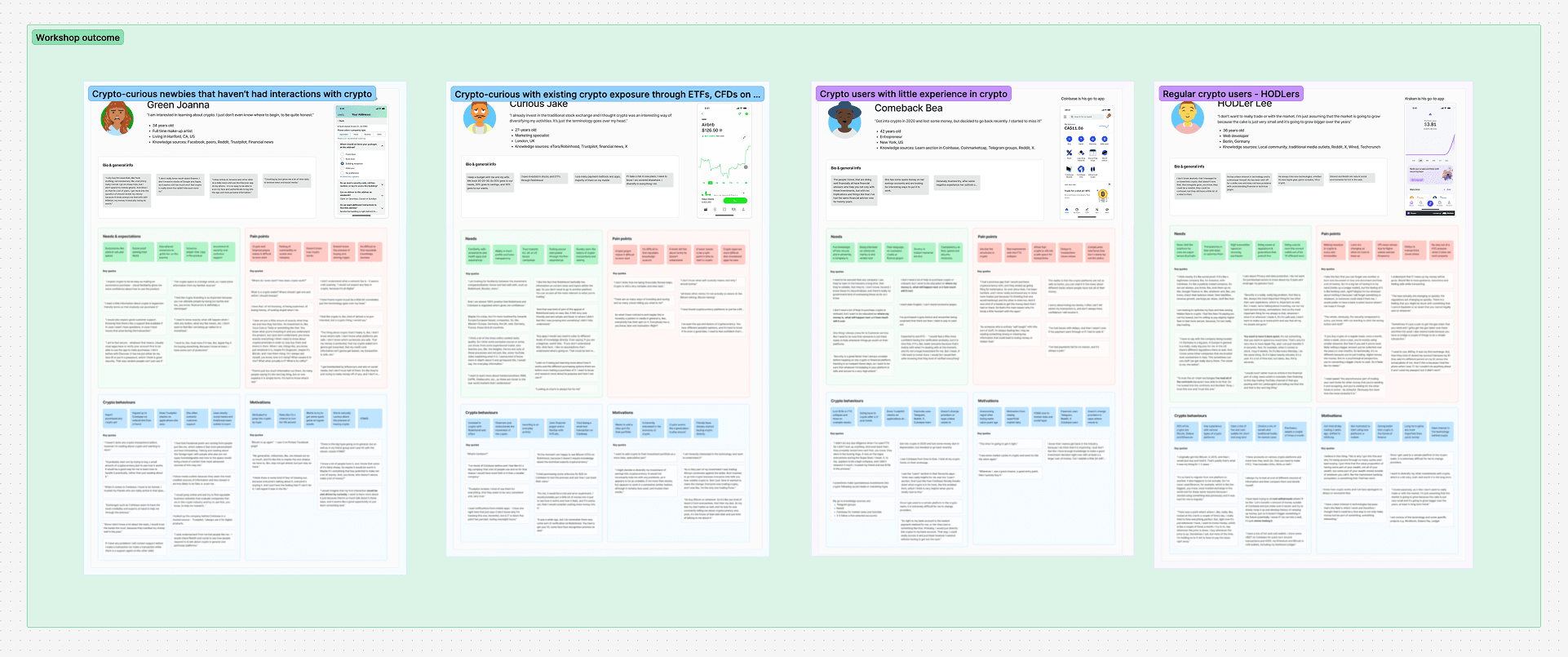
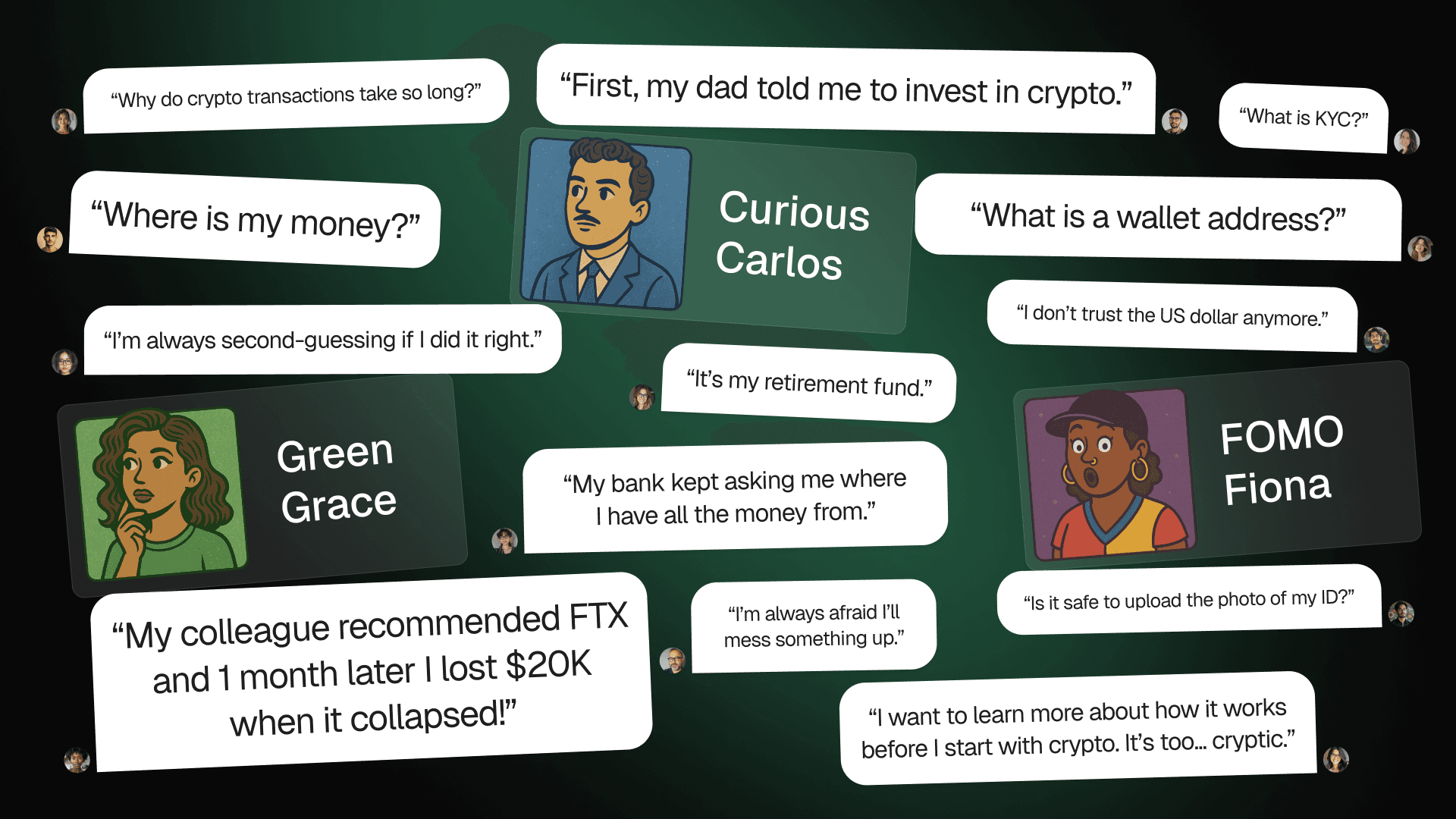
User Personas
In a series of collaborative workshops, I led the team to create key personas, grounded in actual data points and not sticky-note idealistic users.
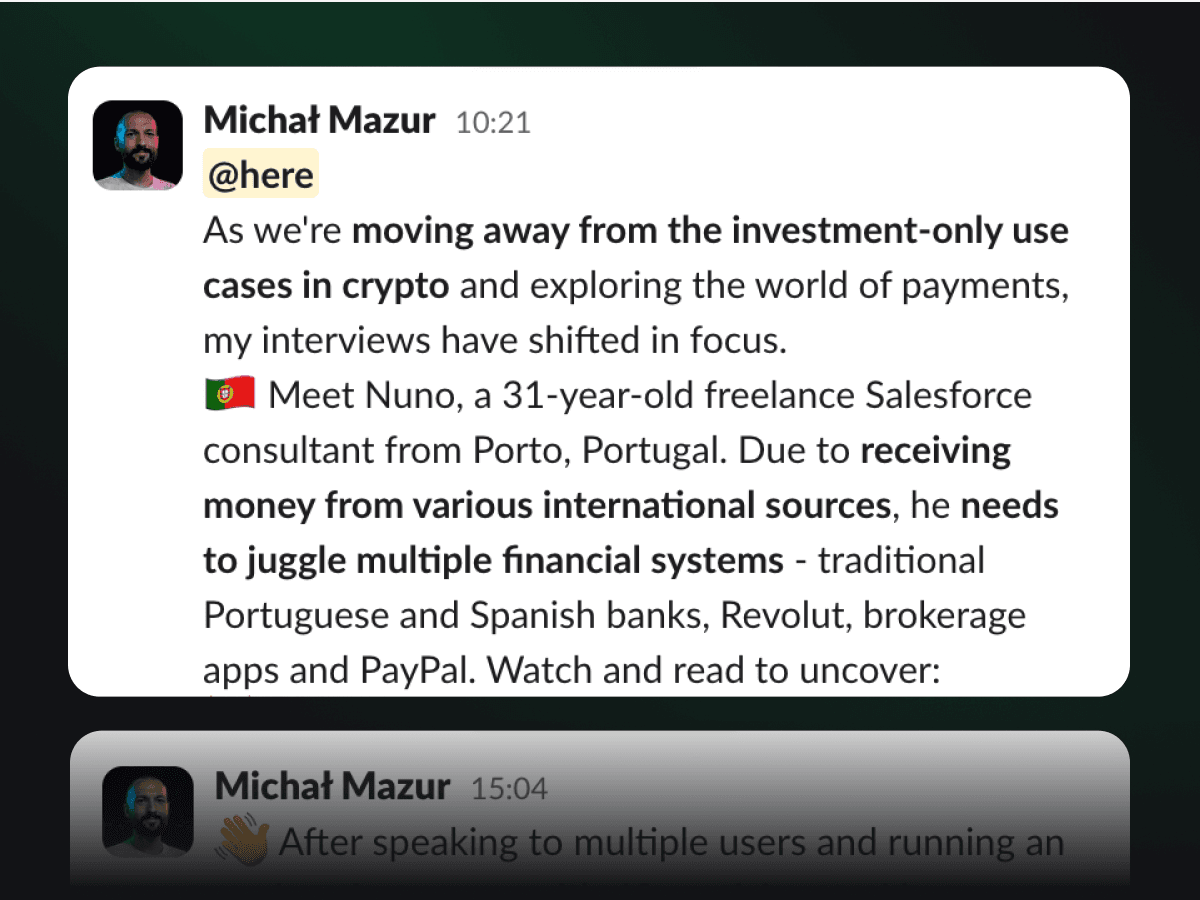
Dedicated Slack Channel
#user-research became one of the most engaging channels in Ramp Network's Slack. Every couple of days my team members watched interview highlights and actively discussed recent survey results.
Research Toolset
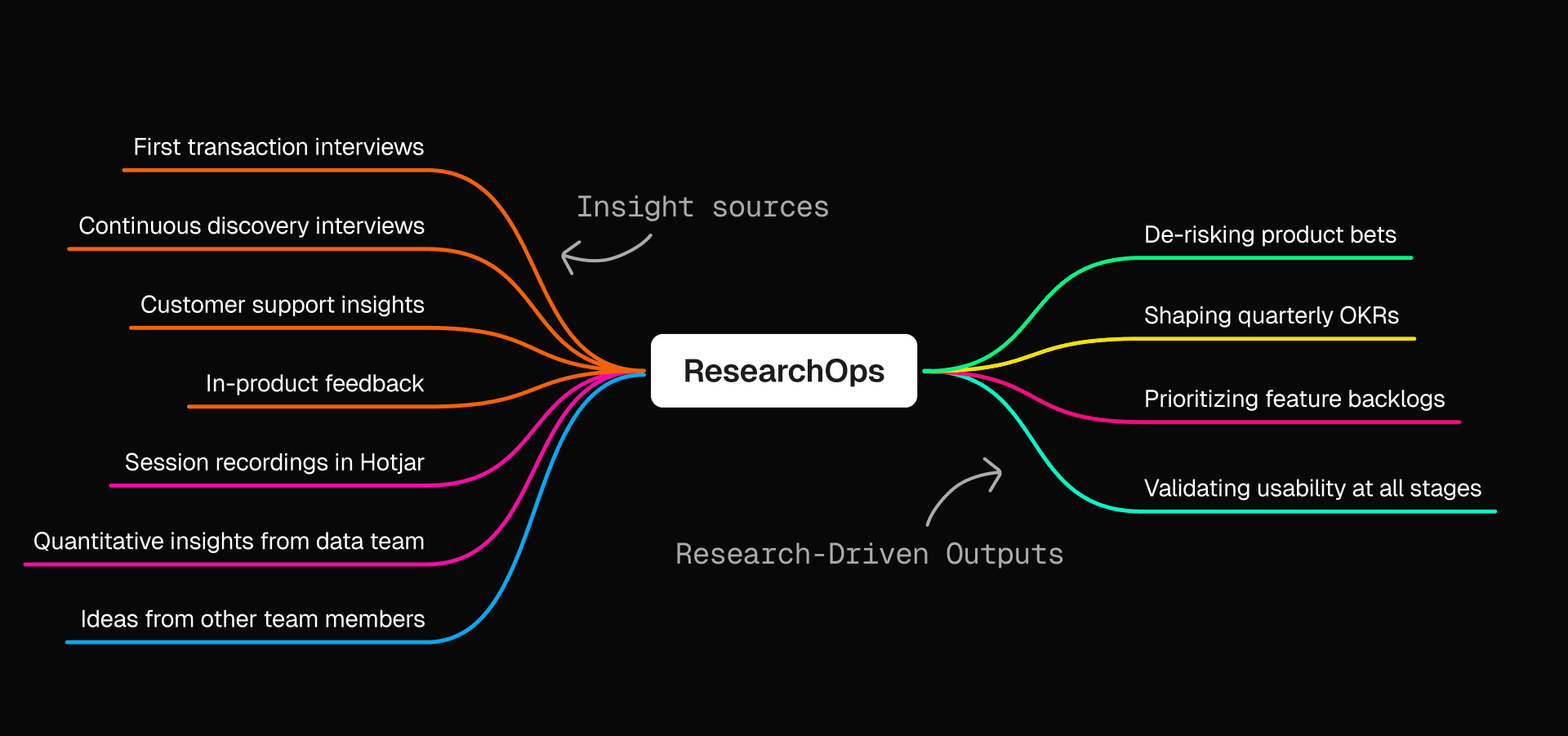
We all love tools, don't we? It's hard to select the right fit for a company, but eventually, we found a stack that allowed us to do rapid research with AI-assisted transcription and synthesis.
Key Results
- 20+
- research studies conducted
- 80+
- user interviews conducted
- 12
- team members onboarded to research
Michał stood at the foundation of our customer research practice, putting in place the right tools, data sets, and methodologies to help the entire team deeply understand our customers. Michal consistently translated insights into clear, actionable product direction. With a rare combination of strategic thinking, rigor, and craft, Michal operated at a truly top-tier level. Any team looking to build customer-led, highly successful products would be lucky to have him.
Process highlights

Auditing existing research efforts
After joining the company, I started by understanding what research was already happening across teams - often informal, undocumented, and siloed. This helped us identify gaps and quick wins.
Research was limited to new employee product tests, which brought immediate feature-level feedback, but didn't offer in-depth insights.
PMs actually wanted to do more research but lacked time, tools, and skills to make it happen.
Leadership was hungry to understand why millions of users were using Ramp Network, but didn't know what questions to ask or how to use the results.
Quantitative analytics were very advanced, which could help triangulate research findings.

Providing the team with immediate value
Within the first 3 weeks I uncovered findings that directly informed a key roadmap bet. Other team members and the leadership could immediately see the value in user research and started asking for more.
Can transactional insurance put the users at ease? Interviewed 10+ users and ran a survey about trust towards insurance.
Test ID verification prototype with first-time crypto users to understand how they would feel about verifying their identity during onboarding.
Tested the entire flow of adding a debit card and processing the payment, including commonly faced error messages.
Validated various types of in-app rewards and incentives to understand what could keep users engaged.

Continuous interview schedule
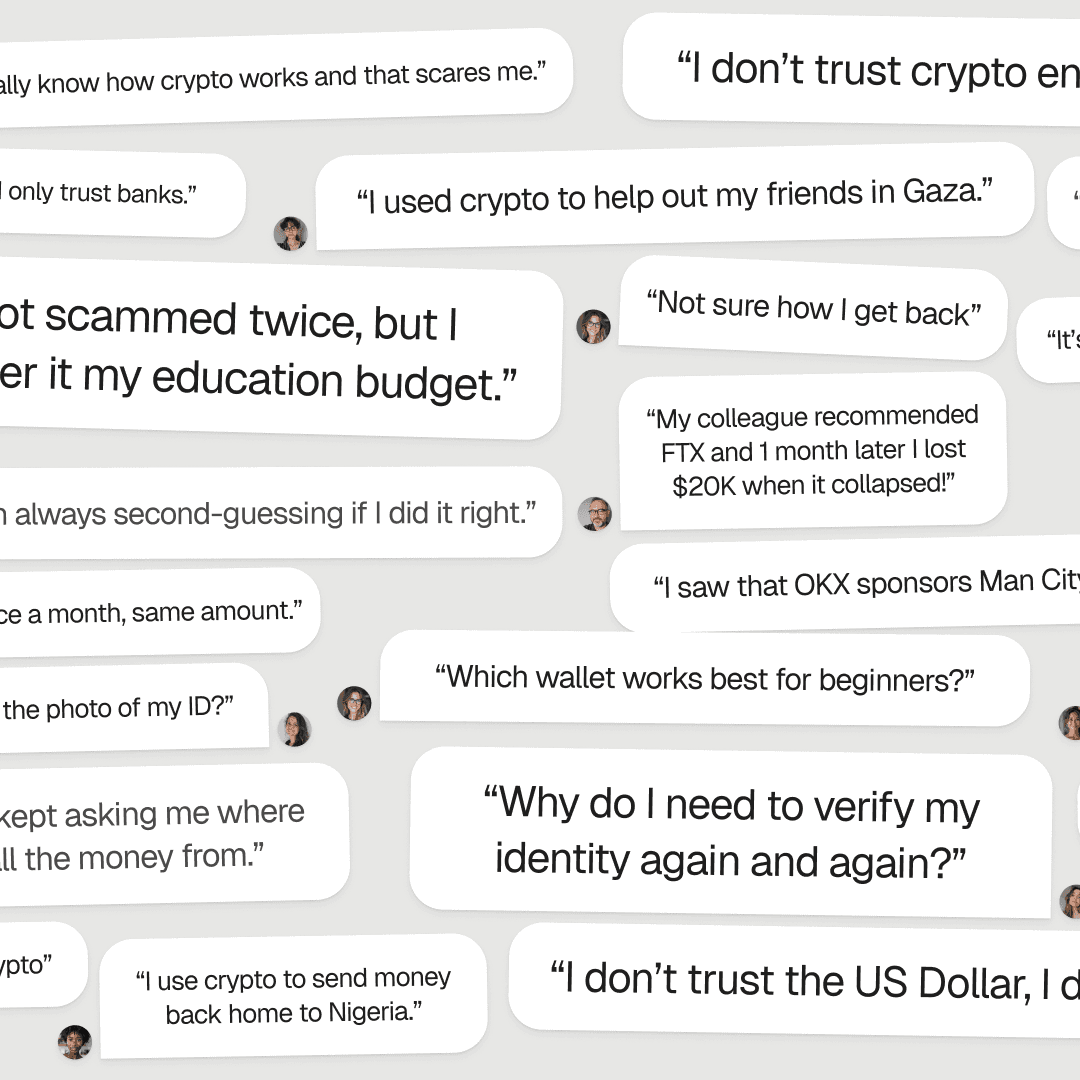
I set up a continuous stream of user interviews. No set script - a set of bullet points and active listening tell me their stories in their own words. Key stories were then turned into interview summaries and shared with the team.
Lack of knowledge on how crypto worked was the main barrier for first-time crypto users. They craved reliable explanations and guides.
Off-ramping (selling crypto) was much more stressful comparing to buying crypto. When it goes wrong, you might lose your money forever.
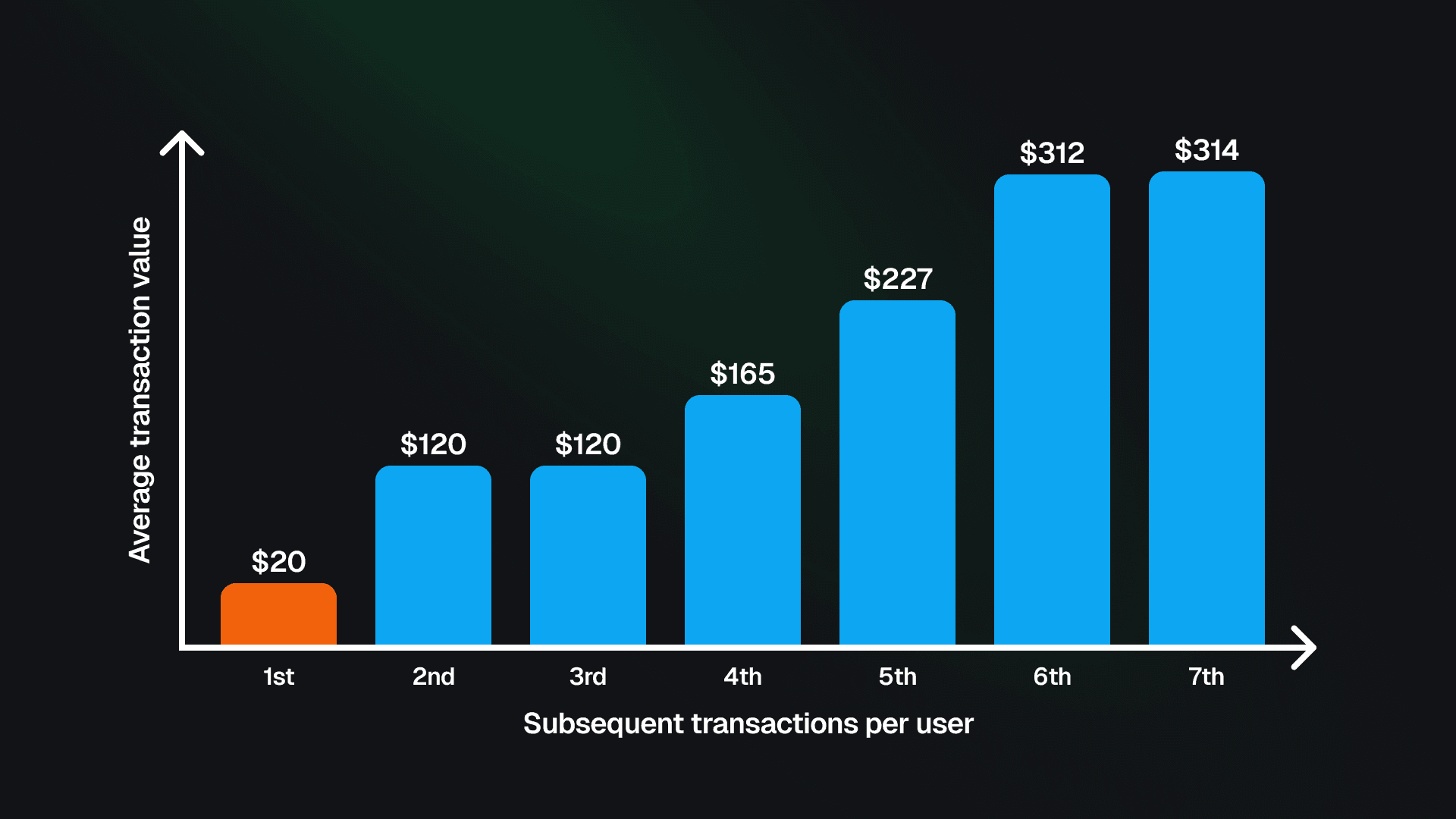
Users often processed a small transaction to test a service before committing to a larger one. This was confirmed by our internal data.
“I saw that OKX sponsors Man City, so I trust it”. Users often were swayed by brand associations and trusted the brand because of it.

Education through practice
From the start, I invited my colleagues to observe interviews and coached them to in running their own conversations. Together, we sat down in interview transcripts and discussed the insights and opportunities they presented.